Temporomandibular disorders describe a group of conditions, not one diagnosis. Joint sounds, limited opening, muscle pain, headache, sleep, parafunction, cervical symptoms, and dental wear can overlap without sharing one cause. A night guard may help some patients, but it is neither a universal diagnosis nor a universal treatment.
Dr. Baruch Tetri came to the subject through his own experience of pain. Personal history does not replace examination; it makes careful listening, documentation, and reversible treatment more important.
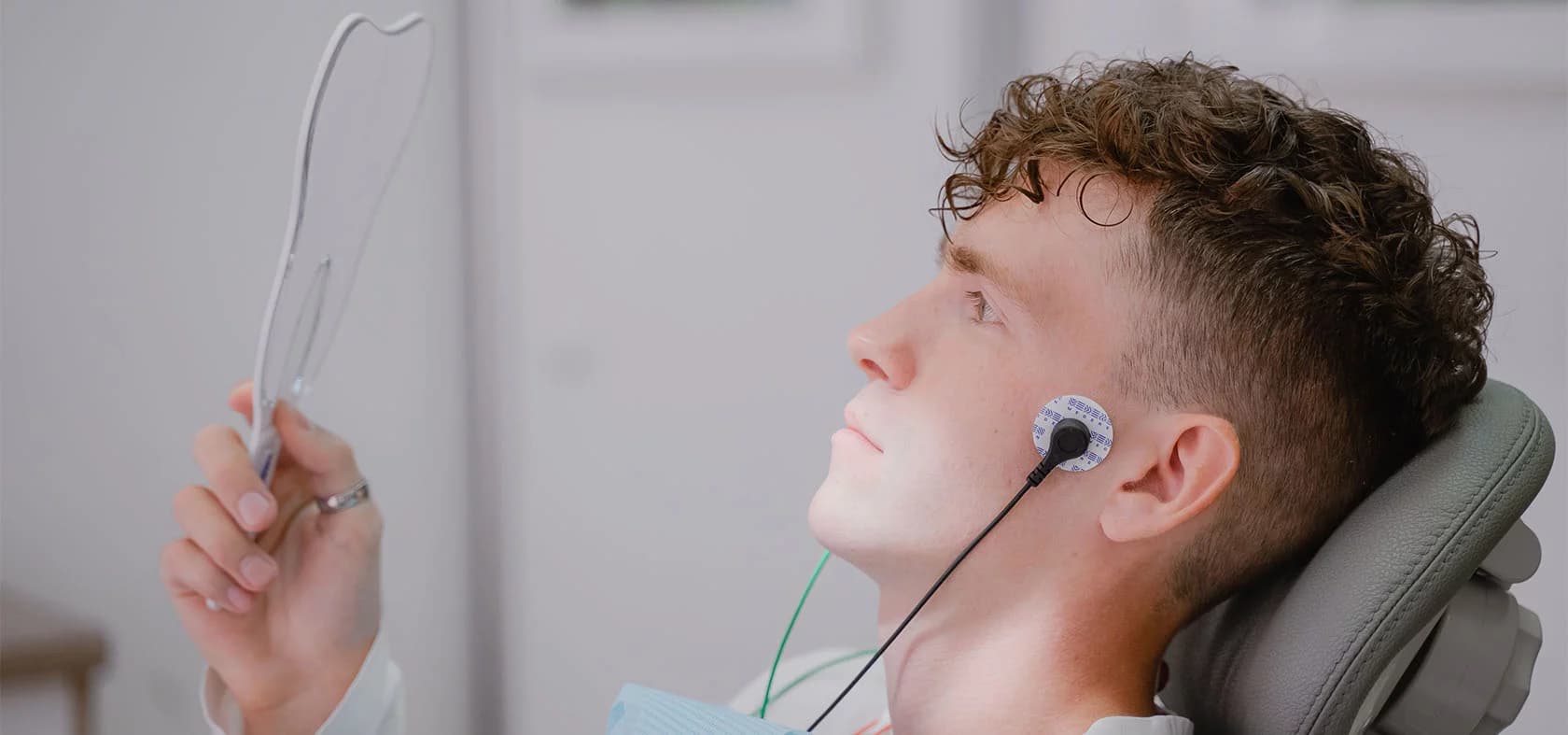
Computerized jaw tracking can record movement, and surface electromyography can record selected muscle activity; neither is a standalone diagnostic test. TENS is a pain-modulation treatment, not a diagnostic measurement. None proves the source of pain or determines irreversible dental treatment by itself.
When a proposed bite change is part of a larger reconstruction, a reversible orthotic or provisional phase can help the patient and clinician observe comfort, movement, speech, and function before definitive ceramic work. The purpose is to test a clinical hypothesis, not to promise a cure.
Good TMJ care is often collaborative. Imaging, physical therapy, pain medicine, sleep evaluation, behavioral support, or another specialist may be appropriate. The disciplined position is simple: name what is known, state what remains uncertain, and escalate treatment only when the evidence supports it.