08 — Work
Bruxism and tooth wear
Protect vulnerable teeth while identifying the pattern, consequences, and contributing factors.
What it is
Bruxism is repetitive jaw-muscle activity expressed as clenching, grinding, bracing, or thrusting. Awake and sleep bruxism are different patterns and are assessed separately. International consensus describes bruxism in otherwise healthy people as a behavior that may be a risk or protective factor—not automatically a disorder that requires treatment. Tooth wear, pain, fracture, or a partner's report may prompt evaluation, but none proves the diagnosis alone. The aim is to identify meaningful consequences, contributing factors, and alternative explanations; protect vulnerable teeth or restorations when appropriate; and avoid promising that an appliance or procedure will stop the behavior or cure sleep, headache, or TMD symptoms.
For
01
Flattened, chipped, cracked, sensitive, or repeatedly restored teeth that need a cause-based wear assessment.
02
Jaw-muscle fatigue or tenderness, morning symptoms, or daytime clenching that should be distinguished from other pain conditions.
03
Grinding reported during sleep, concern about an appliance, or a need to protect extensive restorative work.
01 — Separate the patterns
History, self-report, partner observations, timing, examination, and selected testing distinguish awake clenching or bracing from sleep-related grinding and from other causes of wear or pain.
02 — Match care to consequence
Awareness and behavior strategies, risk-factor review, a protective appliance, medical or sleep referral, and treatment of damaged teeth are considered according to what is actually occurring.
03 — Review and adapt
Symptoms, wear, appliance effects, tooth and restoration condition, and new medical or sleep information are reassessed; treatment is adjusted rather than assumed to be curative.
Bruxism guide
Grinding is a pattern. Treatment depends on what that pattern is doing.
Many people clench or grind without needing dental intervention. Care becomes relevant when the activity is associated with damage, symptoms, restoration risk, or a broader health question—and the response should fit that specific consequence.
Awake and sleep bruxism are not interchangeable
Awake bruxism often appears as clenching, bracing, or sustained contact during waking hours. Sleep bruxism occurs during sleep and may be reported by a partner or considered from signs and symptoms. Their biology, triggers, assessment, and useful interventions differ, so one label should not substitute for identifying the pattern.
What the evaluation can—and cannot—show
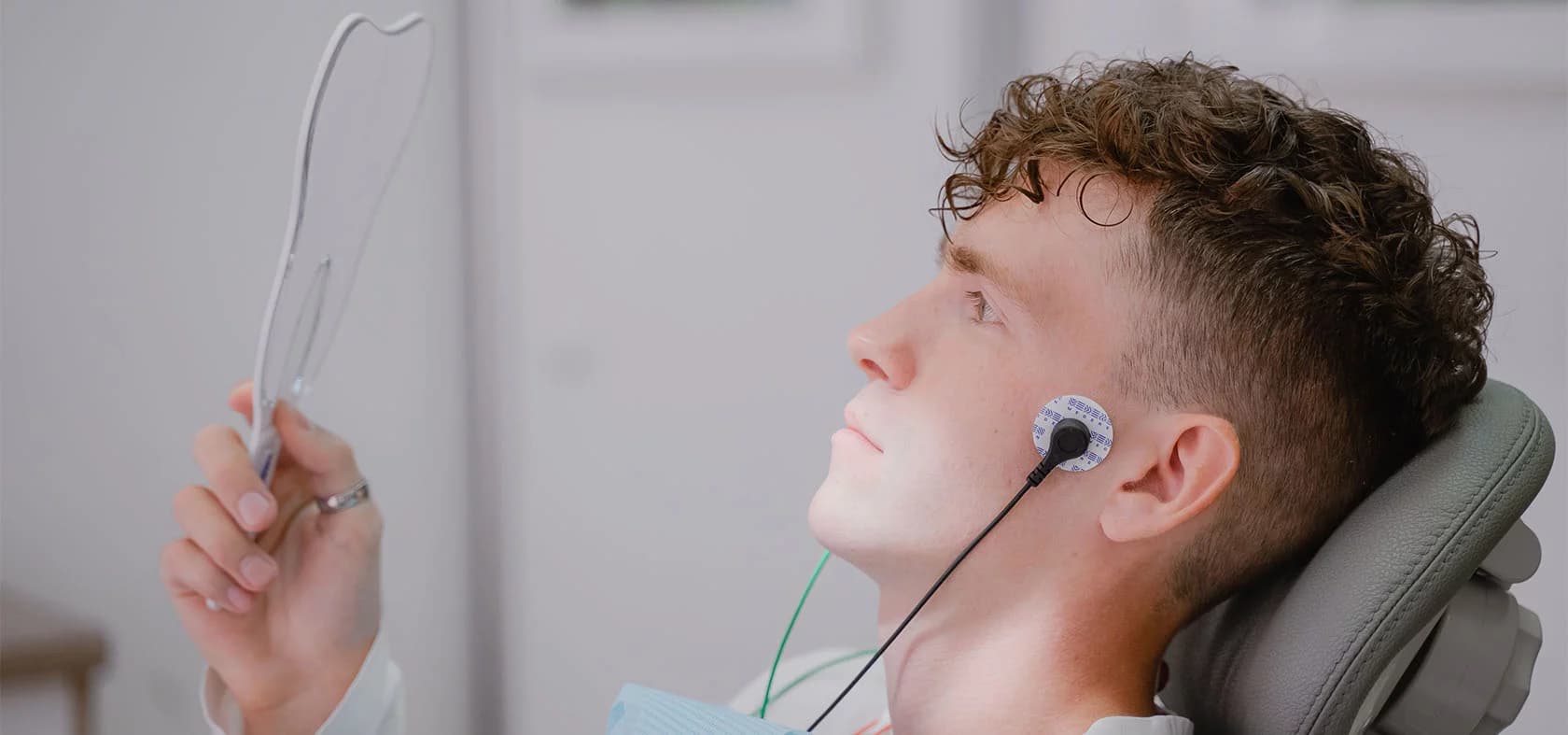
The history reviews timing, frequency, awareness, pain, sleep, stress, medicines and substances, caffeine, alcohol, smoking, and relevant medical conditions. The examination looks for tissue injury, tenderness, fractures, restoration damage, tooth mobility, and wear. Self-report and clinical signs are useful but limited; selected instrumental or sleep testing may be appropriate when the answer would change care. There is no universal yes-or-no cutoff that a routine dental device can establish by itself.
Tooth wear needs a differential diagnosis
Current wear may reflect tooth-to-tooth contact, chemical erosion, abrasion, past activity, diet, reflux, reduced saliva, habits, materials, or several causes together. Wear does not establish whether bruxism is active today, and its severity does not automatically justify full-mouth rehabilitation.
Look for contributing factors and referrals
Stress and coping, sleep disruption, caffeine, alcohol, tobacco, some medicines and substances, and coexisting medical or sleep conditions may be relevant. A dentist should not independently change prescribed medicine. Possible sleep or neurologic concerns, substantial pain, or an unclear pattern may call for coordinated medical, sleep, behavioral-health, or pain evaluation.
What an appliance may do
A properly selected appliance may separate and protect teeth or restorations and can sometimes influence symptoms. It does not reliably eliminate bruxism, correct every bite problem, or guarantee relief from headache, facial pain, TMD, or a sleep disorder. The design should avoid permanent bite change, be monitored for fit and effects, and be reconsidered if it increases pain or changes the bite.
Behavior and self-management
For awake bruxism, awareness of sustained tooth contact, cueing, relaxation, and clinician-directed behavior strategies may help reduce loading. Sleep hygiene and stress management may support overall care, but they are not presented as cures. Treatment targets and follow-up should be explicit enough to judge whether an intervention is helping.
Repair only what the diagnosis supports
Small defects may be monitored or repaired; structural loss, cracks, sensitivity, or failing restorations may require more. Restoring worn teeth does not remove the loading pattern, and extensive treatment introduces preparation, sensitivity, fracture, decay, periodontal, endodontic, repair, and replacement risks. A protective and maintenance plan should be discussed before definitive work.
When to seek prompt assessment
A fractured tooth, swelling, fever, trauma, a sudden change in the bite, inability to open or close normally, severe or escalating pain, or new neurologic symptoms should not be managed as routine grinding online. Urgent or emergency evaluation depends on the symptom and its cause; life-threatening symptoms require emergency services.
Continue the evaluation
Clinical reading
General information only. Diagnosis, treatment, risks, alternatives, and expected recovery are individual and require a clinical evaluation.
The objective is proportionate care: understand the pattern, address important contributors, protect what is vulnerable, and restore only what the clinical findings justify.
Request a visit