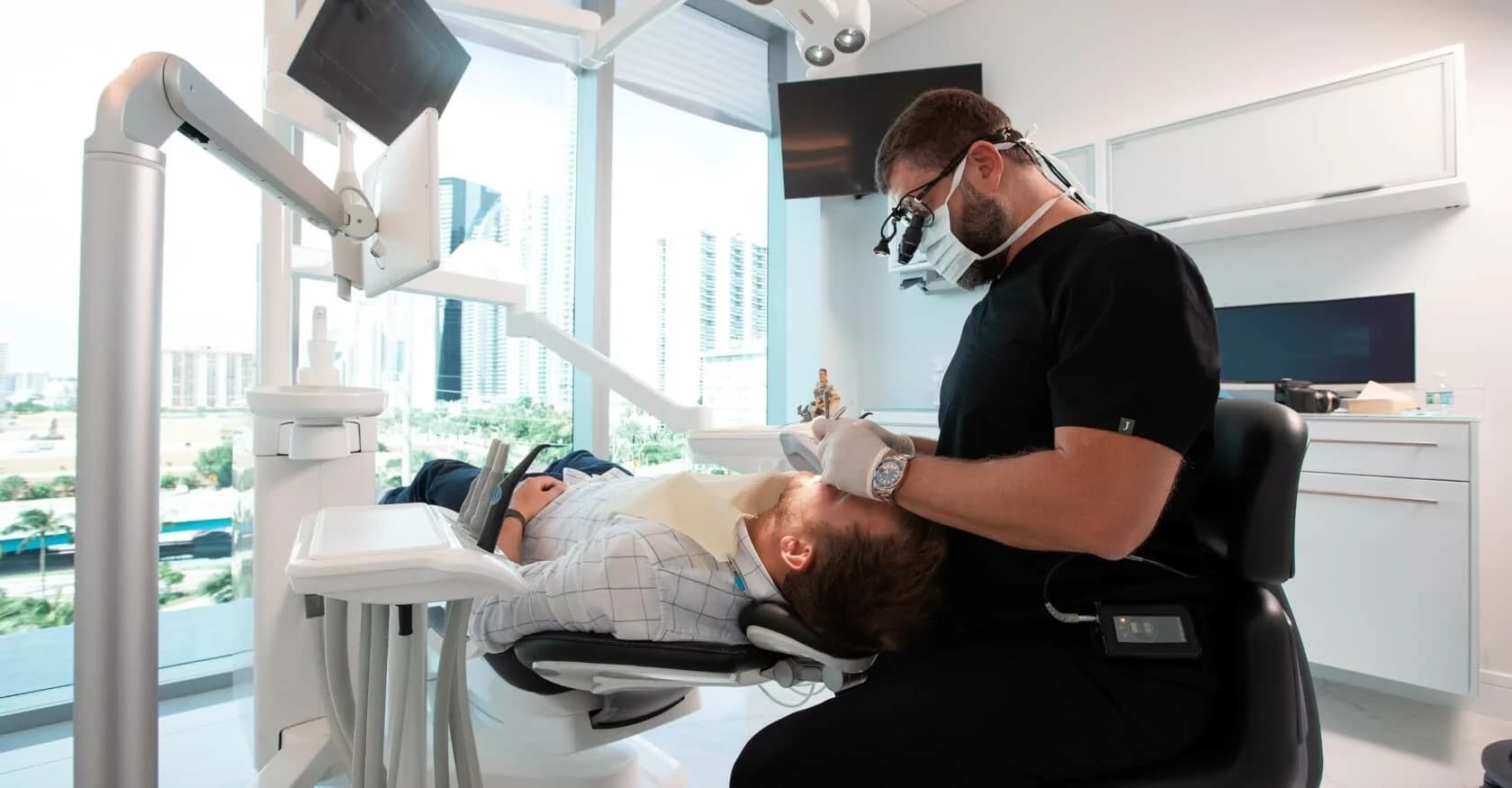
09 — Work
Periodontal care and surgery
The foundation is diagnosed before it is reshaped.
What it is
Gingivitis, periodontitis, gum recession, and an uneven tissue contour are not the same problem. Periodontal care begins with a medical and dental history, examination, periodontal measurements, and appropriate imaging. The findings guide a stepwise plan: improve daily plaque control and modifiable risks, treat deposits and inflammation below the gumline when indicated, then reevaluate before deciding whether a surgical procedure would add meaningful benefit. Restorative and implant decisions should respect the health, architecture, and cleanability of the surrounding tissues.
For
01
Bleeding, swelling, recession, sensitivity, loose teeth, or persistent bad breath that needs a diagnosis rather than a cosmetic cover-up.
02
Known bone loss, deep periodontal pockets, or sites that remain active after nonsurgical treatment.
03
A restorative or implant plan that depends on stable, maintainable gum and bone support.
01 — Diagnose and classify
History, risk factors, a tooth-by-tooth and tissue examination, periodontal charting, and indicated radiographs distinguish gingival inflammation, periodontitis, recession, and other causes of attachment loss.
02 — Control inflammation and risk
Individualized home-care instruction, professional treatment of plaque and calculus, and attention to factors such as tobacco use and diabetes are part of the first phase.
03 — Instrument below the gumline
When periodontitis is present, subgingival instrumentation—often called scaling and root planing or deep cleaning—may be used to disrupt deposits and biofilm around affected roots.
04 — Reevaluate before surgery
Healing, bleeding, pocket depth, home care, prognosis, and the patient's priorities are reassessed. Surgery is considered for selected residual problems, not assumed at the first visit.
05 — Maintain the result
Supportive periodontal care is individualized around disease history and current risk. Tissue, teeth, restorations, and implants still require ongoing review.
Periodontal guide
Treat the disease first. Reshape tissue only when the diagnosis supports it.
A serious periodontal plan explains what condition is present, what can be controlled without surgery, what remains after reevaluation, and how any proposed procedure changes the long-term maintenance burden.
Gingivitis and periodontitis are different diagnoses
Plaque-related gingivitis is inflammation without the attachment and bone loss that define periodontitis, and it can often improve with professional care and effective daily plaque control. Periodontitis involves damage to the tissues supporting the teeth. Symptoms can be mild or absent, so diagnosis cannot be made from appearance or pain alone.
Stage describes severity; grade informs risk
The current classification describes periodontitis by stage and grade. Stage reflects severity, complexity, and the consequences of tooth loss; grade adds information about progression and risk. These labels organize a plan, but they do not replace tooth-by-tooth prognosis or the patient's medical, functional, and restorative context.
The first phase is usually nonsurgical
Evidence-based pathways begin with patient education, effective home plaque control, management of modifiable risk factors, and professional supra- and subgingival treatment. Scaling and root planing is an established initial treatment. Antibiotics, antiseptics, lasers, and other adjuncts are not automatic additions; their indication and evidence differ.
Reevaluation is a decision point
The response after initial therapy determines what comes next. Sites that become shallow, non-bleeding, and maintainable may continue in supportive care. Persistent deep or complex sites may require further instrumentation, periodontal surgery, a different prognosis, or referral depending on the defect and the person.
Surgery has several purposes
Access or pocket-reduction procedures may improve visibility and cleanability at selected residual sites. Regenerative procedures may be considered for certain intrabony or furcation defects. The anatomy, evidence for the material and technique, patient risk, cost, and expected maintenance all matter; regeneration cannot be promised for every defect.
Recession and root coverage need their own diagnosis
Recession can affect sensitivity, root protection, appearance, and tissue stability. Treatment may involve monitoring, behavior or hygiene changes, restorative care, orthodontic coordination, a flap, a soft-tissue graft, or another approach. Root coverage and esthetic improvement vary by defect and technique, and complete coverage is not guaranteed.
Crown lengthening can be restorative or esthetic
Reshaping gum and sometimes supporting bone may expose more tooth for a restoration or alter a gingival contour. The plan should protect the periodontal attachment, account for tooth proportions and smile line, and allow adequate healing before definitive restorative work. Removing tissue solely to make a tooth look longer is not a diagnosis.
Risks and recovery depend on the procedure
Possible effects include pain, swelling, bleeding, infection, recession or root exposure, sensitivity, contour or appearance changes, graft-site discomfort, incomplete correction, recurrence, and the need for additional care. Tooth loss can remain possible in advanced disease. Individual risks, medicines, instructions, and urgent-contact thresholds belong in clinical consent.
Supportive care is part of treatment
Periodontal stability depends on daily plaque control, risk-factor management, and an individualized professional maintenance schedule. Research generally associates better adherence with more favorable long-term outcomes, but the evidence does not create a guarantee for a particular tooth or patient. Periodontal treatment should not be marketed as a cure for diabetes, heart disease, or another systemic condition.
Continue the evaluation
Clinical reading
General information only. Diagnosis, treatment, risks, alternatives, and expected recovery are individual and require a clinical evaluation.
- NIDCR: Periodontal (gum) disease ↗
- ADA: Nonsurgical treatment of periodontitis guideline ↗
- AAP/EFP: Periodontitis classification consensus ↗
- EFP S3 guideline: Treatment of stage I–III periodontitis ↗
- EFP S3 guideline: Treatment of stage IV periodontitis ↗
- Cochrane review: Root-coverage procedures ↗
- Systematic review: Regenerative treatment of intrabony defects ↗
Healthy, maintainable tissue is part of the result—not an ornamental detail placed around it.
Request a visit