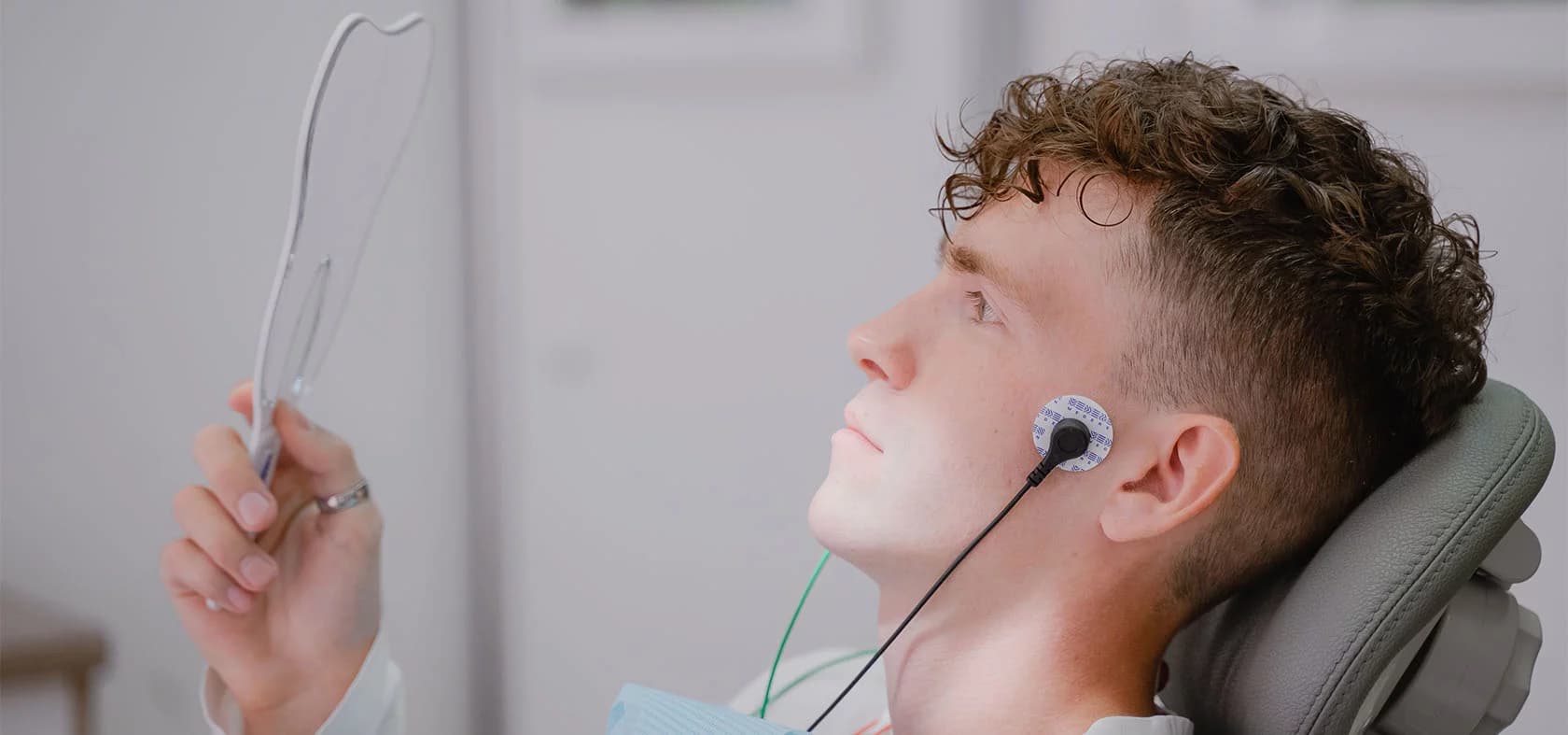
The jaw functions through teeth, muscles, nerves, and temporomandibular joints. Computerized jaw tracking records a movement path; surface electromyography records electrical activity from selected muscles. TENS applies surface electrical stimulation as a pain-modulation treatment adjunct—it is not a diagnostic test. None identifies a TMD diagnosis, the cause of pain, or a uniquely correct bite position by itself.
A useful measurement answers a defined question and is interpreted with symptoms, history, examination, and imaging only when indicated. Jaw tracking and surface EMG have important diagnostic limitations, and a response to TENS does not prove treatment need. A result should not drive irreversible care when it does not change cautious, reversible clinical reasoning.
When extensive restorative treatment has its own documented indication, a reversible appliance, mock-up, or provisional phase may help assess comfort, speech, cleaning access, contacts, and function before definitive work. Response during that phase does not establish an ideal jaw position, prove causation, or guarantee that pain will resolve or a restoration will last.