Journal / 05 / 6 min
The skull in the room: what the Planmeca Viso G7 actually lets us do
A 30 × 30 cm volume, 3D dissection, 4D jaw motion, a face composited onto bone. The reconstruction is allowed to start when the neck and the joint are no longer invisible.
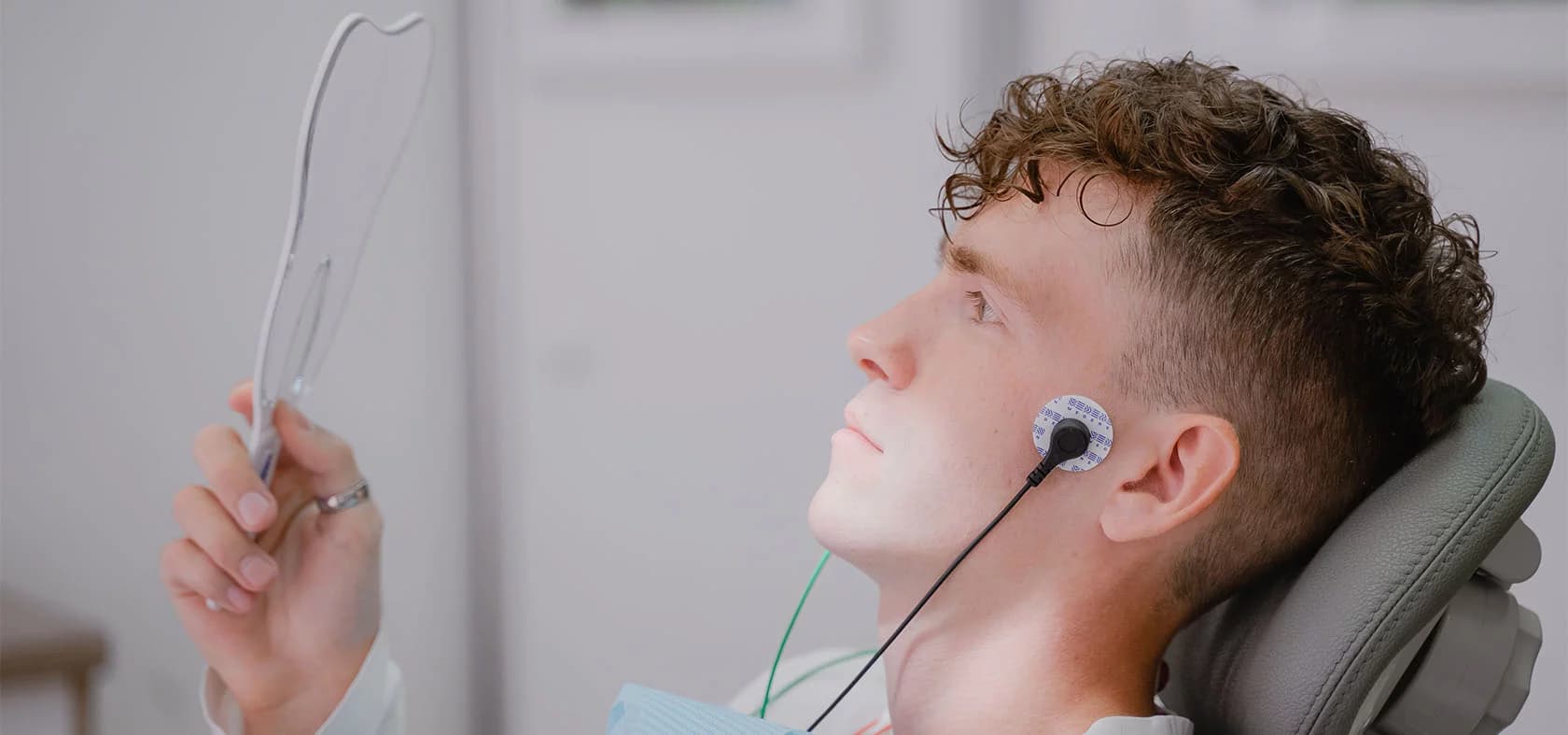
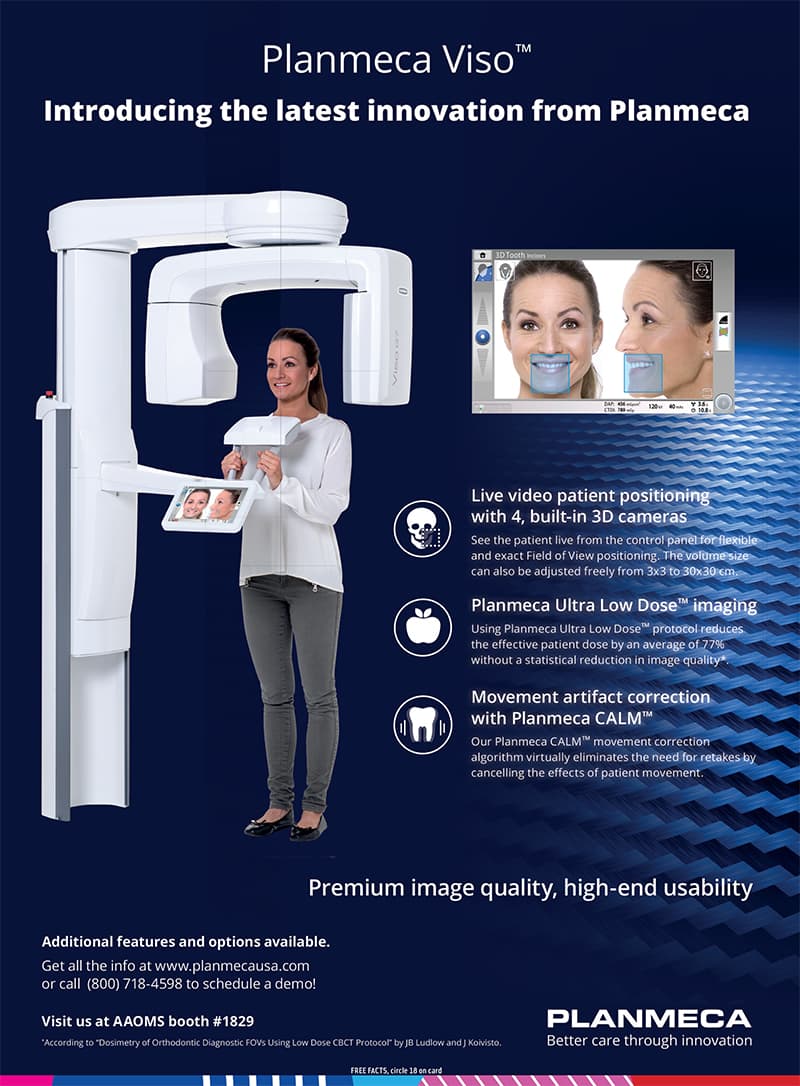
Most dental 3D machines photograph a jaw. The Planmeca Viso G7, now in this practice, can photograph a person from the vault of the skull through the face to the seventh cervical vertebra — a freely chosen volume from a 3 × 3 cm tooth at 75 microns up to 30 × 30 cm. One rotation can cover the entire maxillofacial field without stitching. That is not a larger postcard. It is a different diagnosis.
In Romexis the volume is dissected. Axial, coronal, sagittal, and any plane we need. Airway, nerve, sinus, mandible, and teeth can be segmented. We sit with the patient inside their own head so the plan is not a speech. They see why a collapsed bite is also a neck, an airway, a joint that has been fighting for years. 4D Jaw Motion records the mandible moving — the condyle as a path, not a still. Planmeca ProFace takes a 3D photograph with four cameras in the sensor and lays the living face onto the bone. The virtual patient is then the same person who will sit for PIC and the mill.
Dose is not an afterthought. Ultra Low Dose exists so a traveler is not punished for a complete workup. CALM corrects motion so we do not retake. 120 kV reduces the metal fog around existing fixtures — the typical full-arch refugee. Live cameras on the unit set the field of view with the patient facing the operator. The capture is exact because the case is exact.
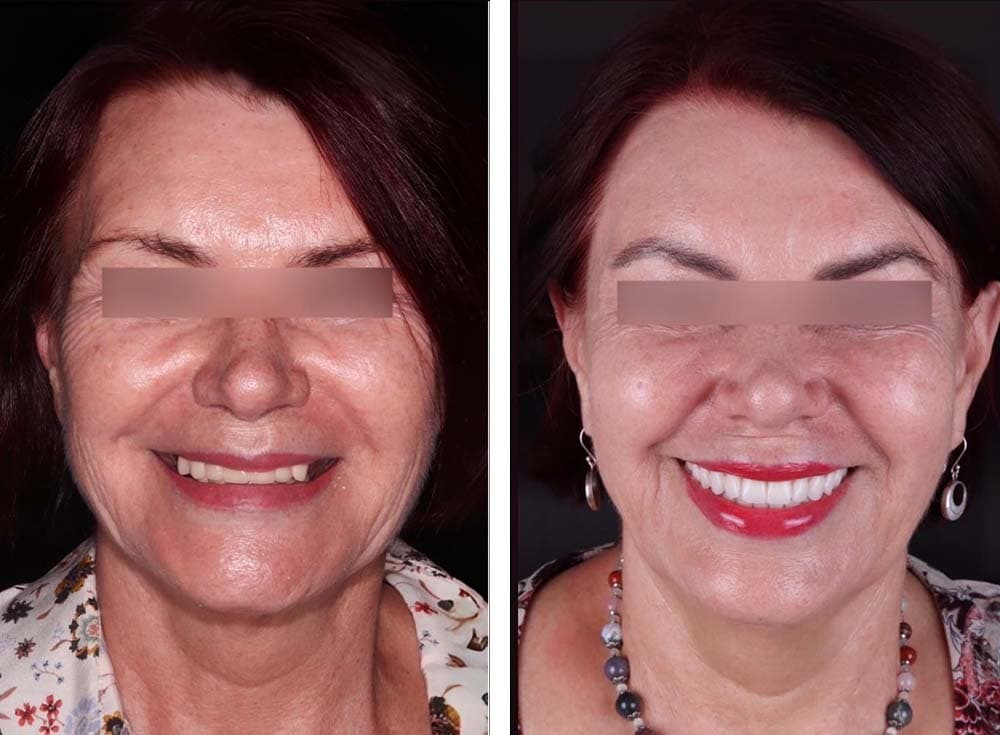
What we do with it is the point. Gneuromuscular seating of the bite against a joint we have actually seen. Implant trajectories in bone that includes the sinus and the nerve, not a cropped rectangle. Vertical dimension checked against airway and cervical posture before porcelain is allowed to speak. Then photogrammetry, then the robot downstairs. Precision of that order takes time. It is compensated as such. The machine does not make the work cheap. It makes the work honest.